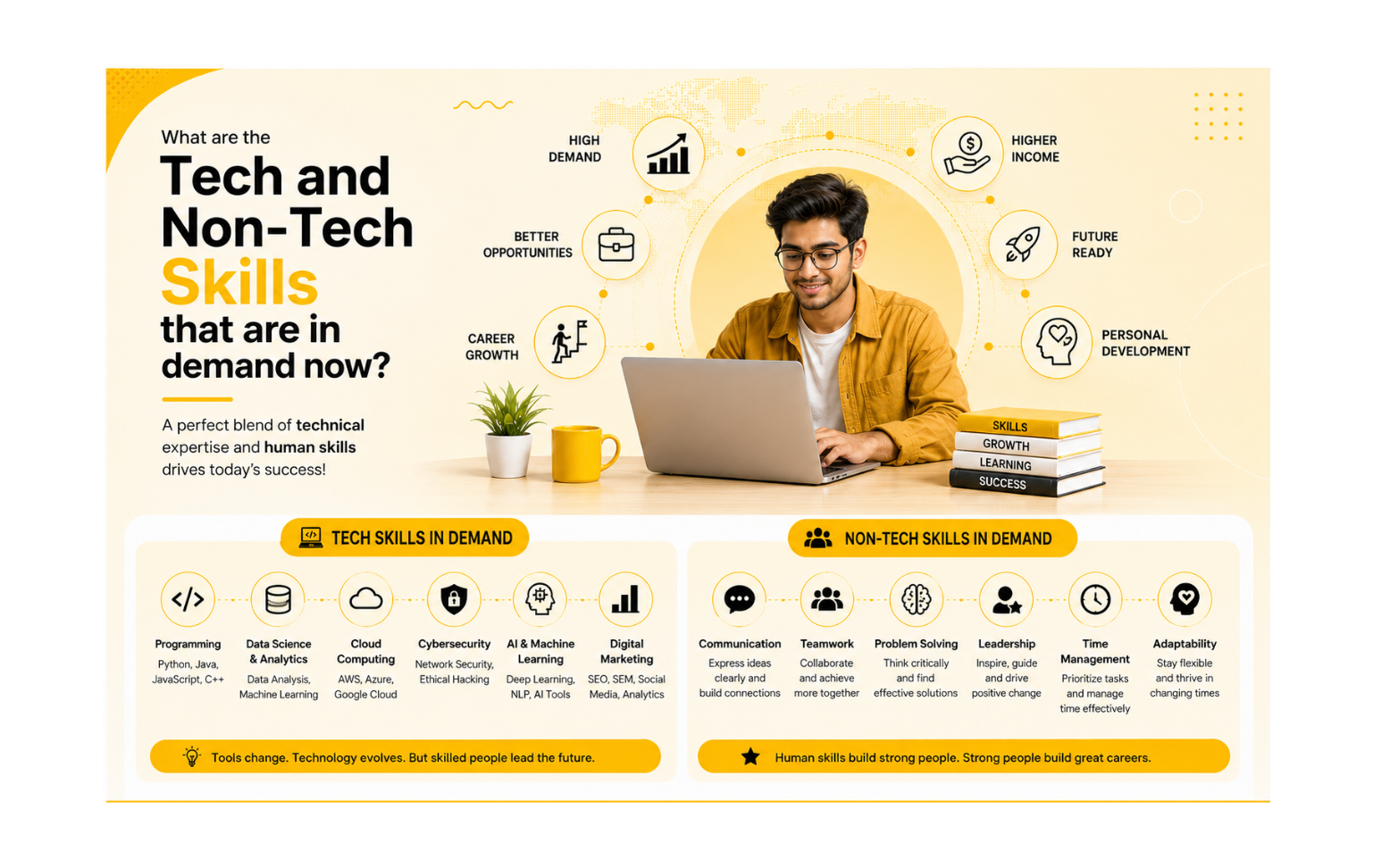
What are the Tech and Non-Tech skills that are in demand now?
The job market is evolving faster than ever, driven by rapid technological advancements, digital transformation, and changing business needs. Today, employers are looking for professionals who can not only work with modern technologies but also communicate effectively, solve problems, collaborate with teams, and adapt to new challenges. Whether you're a student preparing for your career, a job seeker exploring new opportunities, or a working professional looking to upskill, developing the right combination of technical and non-technical skills can significantly improve your career prospects.
Some of the most in-demand tech skills today include:
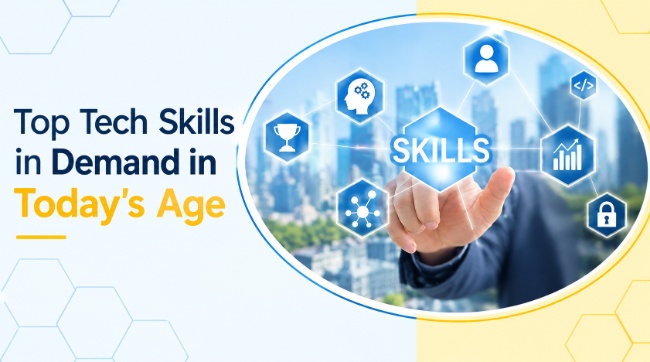
Some of the most in-demand tech skills today include:
-
Artificial Intelligence (AI) and Machine Learning (ML): Companies are using AI for automation, customer service, predictive analytics, and content generation. Skills in tools like Python, TensorFlow, PyTorch, and prompt engineering are highly sought after.
-
Data Analytics and Data Science: Businesses rely on data to make informed decisions. Knowledge of SQL, Excel, Power BI, Tableau, Python, and data visualization can open opportunities across almost every industry.
-
Cloud Computing: Organizations are increasingly moving their infrastructure to the cloud. Experience with AWS, Microsoft Azure, or Google Cloud Platform (GCP) is considered a valuable asset.
-
Cybersecurity: As cyber threats continue to rise, professionals who can secure networks, applications, and sensitive data are in high demand. Skills in ethical hacking, network security, penetration testing, and risk management are especially valuable.
-
Software Development: Programming remains one of the strongest career paths. Languages such as Python, JavaScript, Java, C#, and Go, along with frameworks like React, Node.js, and Django, continue to be widely used.
-
Robotics and AI: Intelligent robots are transforming industries by automating tasks, improving accuracy, and increasing productivity. From manufacturing and healthcare to agriculture and logistics, AI-powered robots are becoming more common. Skills in Python, Robot Operating System (ROS), computer vision, machine learning, and embedded systems, are increasingly valuable as businesses continue to invest in smart robotics solutions.
-
DevOps and Automation: Companies want faster and more reliable software delivery. Familiarity with Docker, Kubernetes, Jenkins, Git, CI/CD pipelines, and Infrastructure as Code (IaC) is increasingly important.
-
Blockchain Technology: Beyond cryptocurrencies, blockchain is being adopted in finance, supply chain management, healthcare, and digital identity verification.
-
Internet of Things (IoT): Connected devices are transforming industries such as manufacturing, healthcare, agriculture, and smart cities. Skills in embedded systems, sensors, networking, and IoT platforms are becoming more relevant.
-
UI/UX Design: Businesses understand that user experience directly impacts customer satisfaction. Professionals skilled in Figma, Adobe XD, wireframing, prototyping, and user research are in steady demand.
-
Generative AI Tools: The ability to effectively use tools like ChatGPT, GitHub Copilot, Claude, Gemini, Midjourney, and other AI assistants is becoming an essential workplace skill rather than just a bonus.
Top Non-Tech Skills in Demand
Technology is transforming the workplace, but technical knowledge alone is no longer enough. Companies are increasingly looking for professionals who can communicate effectively, lead teams, solve business problems, and adapt to change. Whether you're working in IT, marketing, finance, or any other industry, these non-technical skills can significantly improve your employability and career growth.
Some of the most in-demand non-tech skills today include:
Technology is transforming the workplace, but technical knowledge alone is no longer enough. Companies are increasingly looking for professionals who can communicate effectively, lead teams, solve business problems, and adapt to change. Whether you're working in IT, marketing, finance, or any other industry, these non-technical skills can significantly improve your employability and career growth.
Some of the most in-demand non-tech skills today include:
-
Communication Skills: Clear written and verbal communication helps professionals explain ideas, collaborate with teams, present information confidently, and build strong relationships with clients and colleagues.
-
Leadership and People Management: Organizations value professionals who can lead projects, motivate teams, make decisions, resolve conflicts, and manage responsibilities effectively, even if they are not in formal leadership roles.
-
Critical Thinking and Problem Solving: Employers seek individuals who can analyze situations, identify challenges, evaluate different solutions, and make informed decisions instead of simply following instructions.
-
Project Management: Managing tasks, deadlines, budgets, and team collaboration is an essential skill across industries. Knowledge of Agile, Scrum, Kanban, Jira, Trello, Asana, and Microsoft Project is increasingly valuable.
-
Digital Marketing: As businesses continue to expand online, skills in social media marketing, content marketing, email marketing, paid advertising, branding, and marketing analytics are in high demand.
-
Sales and Business Development: Companies need professionals who can generate leads, build customer relationships, negotiate effectively, and drive business growth through strong sales strategies.
-
Content Writing and Copywriting: High-quality content remains essential for websites, blogs, social media, advertising, and email campaigns. Professionals who can create engaging and persuasive content are valuable across many industries.
-
Financial Literacy and Business Analysis: Understanding budgeting, financial planning, business strategy, market trends, and business performance helps professionals make better decisions regardless of their job role.
-
Emotional Intelligence (EQ): The ability to understand emotions, build trust, handle feedback, work collaboratively, and manage workplace relationships is becoming one of the most important professional skills.
-
Time Management and Productivity: Managing priorities, meeting deadlines, staying organized, and maintaining productivity are essential skills in today's fast-paced work environment, especially in remote and hybrid workplaces
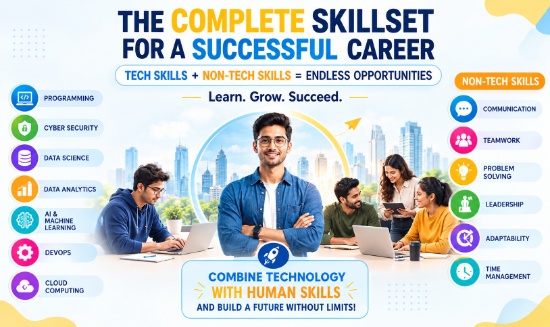
The professionals who stand out in today's job market are those who combine technical expertise with strong business and interpersonal skills. For example, a data analyst who can communicate insights clearly, a software developer who understands project management, or a digital marketer who uses AI tools effectively has a much greater competitive advantage than someone who relies on technical knowledge alone.
Employers are increasingly hiring professionals who can not only perform technical tasks but also collaborate with teams, solve real business problems, manage projects, and communicate ideas effectively. Developing both technical and non-technical skills helps you become more adaptable, increases your career opportunities, and prepares you for leadership roles in the future.
Employers are increasingly hiring professionals who can not only perform technical tasks but also collaborate with teams, solve real business problems, manage projects, and communicate ideas effectively. Developing both technical and non-technical skills helps you become more adaptable, increases your career opportunities, and prepares you for leadership roles in the future.