
What Is a Project Manager? What Do They Do?
Projects are everywhere. A company may be launching a new product, developing a website, organizing an event, opening a new office, or implementing new software. Behind many successful projects is a professional who keeps everything organized and moving in the right direction: a Project Manager.
But what exactly does a Project Manager do? What are their responsibilities, what skills do they need, and why are they important to an organization?
This guide explains the role of a Project Manager in clear terms and covers everything you need to know about this career.
What Is a Project Manager?
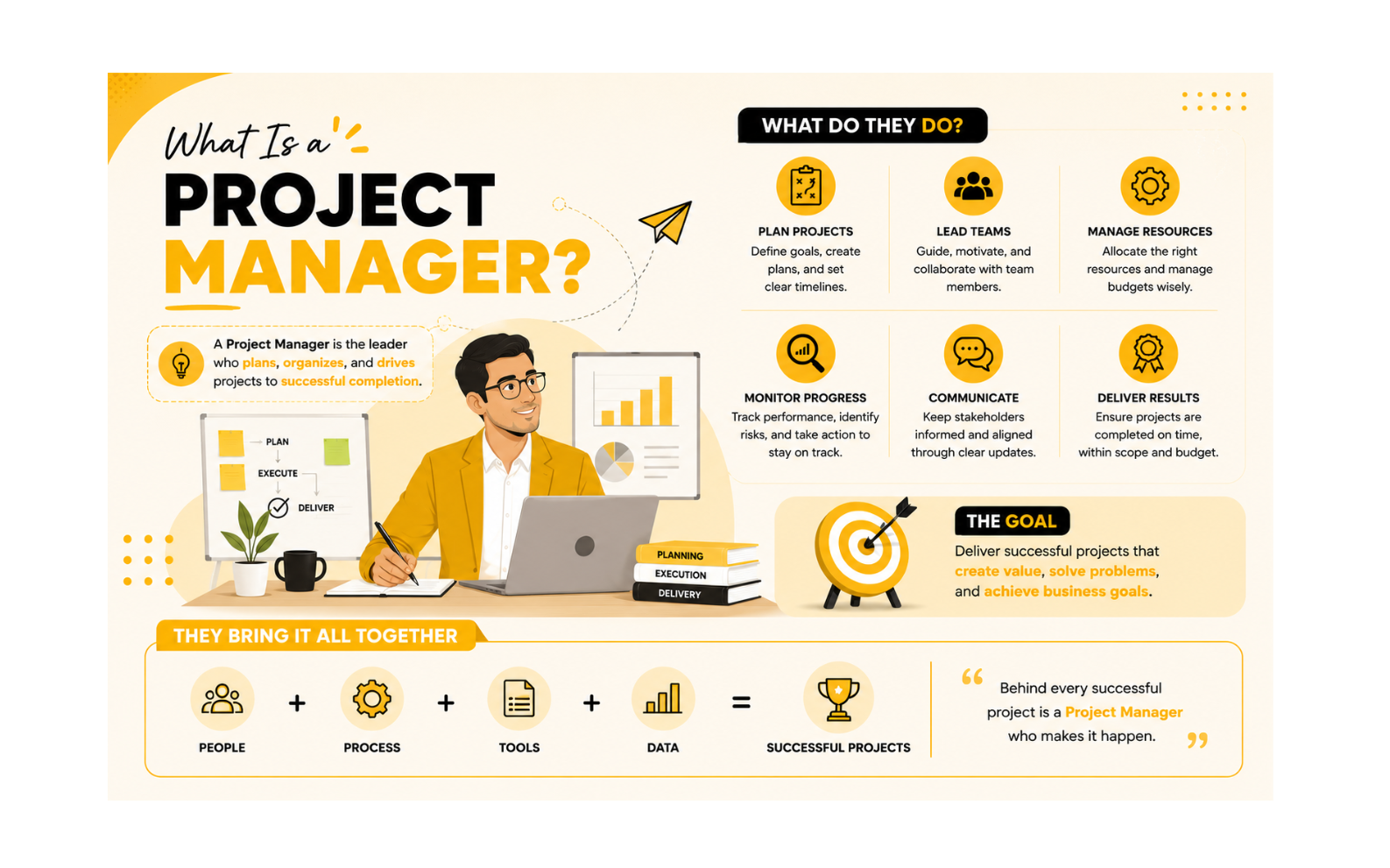
A Project Manager (PM) is a professional responsible for planning, organizing, and managing a project from beginning to completion.
Their main goal is to make sure a project is completed on time, within the planned budget, and according to the required quality and objectives.
A Project Manager works with different people, including team members, clients, managers, developers, designers, marketers, and other stakeholders. They coordinate these people and resources to keep the project on track.
For example, imagine a company wants to build a new website. Developers may handle the technical development, designers may create the visual design, and content writers may prepare the content. The Project Manager coordinates all these activities, sets deadlines, tracks progress, manages issues, and communicates with everyone involved.
In simple words, a Project Manager is the person who helps turn a project plan into a completed project.

What Does a Project Manager Do?
A Project Manager has many responsibilities, and their exact work depends on the industry and type of project. However, some responsibilities are common across most projects.
1. Plans the Project
Planning is one of the most important responsibilities of a Project Manager.
Before work begins, the Project Manager defines what needs to be done, how it will be done, who will do it, and when it should be completed.
They may create a project timeline, identify important tasks, set milestones, estimate resources, and establish priorities.
Good planning helps the team understand exactly what needs to happen and reduces confusion during the project.
2. Defines Project Goals and Scope
A Project Manager needs to understand the project's objectives clearly.
They determine what the project should deliver and what is outside its scope. This helps prevent Extra Work, where additional work keeps getting added without proper planning, time, or resources.
For example, if the goal is to develop a company's website, adding an entirely new mobile application during the project could increase the workload and delay the original deadline.
A Project Manager helps keep the project focused on its agreed goals.
Want to explore the role in more detail? Discover the key responsibilities of a Project Manager, from planning and team coordination to risk management, communication, and project delivery, in our detailed guide:[What Does a Project Manager Do? Key Roles & Responsibilities]
Tools Used by Project Managers:
Project Managers often use digital tools to organize and track their work.
Common project management tools include Trello, Asana, Jira, Monday.com, Microsoft Project, and ClickUp.
These tools can help teams manage tasks, assign responsibilities, track deadlines, monitor progress, share documents, and communicate project updates.
The specific tools used depend on the organization, industry, and project methodology.
Where Do Project Managers Work?
Project Managers are needed across many industries.
They can work in:
• Information technology and software development
• Construction and engineering
• Marketing and advertising
• Finance and banking
• Healthcare
• Education
• Manufacturing
• E-commerce
• Consulting
• Media and entertainment
Because almost every industry works on projects, project management skills can be useful across a wide range of careers.
Project Manager vs. Team Leader
A Project Manager and Team Leader may have similar responsibilities, but their focus is different.
A Project Manager focuses on the overall project, including scope, schedule, budget, risks, resources, stakeholders, and final delivery.
A Team Leader generally focuses more directly on guiding and supporting a particular team and its day-to-day work.
In some organizations, one person may perform both roles.

Why Is a Project Manager Important?
Without effective project management, even a talented team can struggle with unclear goals, missed deadlines, poor communication, unnecessary costs, and changing requirements.
A Project Manager brings structure to the process. They help everyone understand what needs to be done, who is responsible, when tasks are due, and how the project is progressing.
The result is better coordination, clearer communication, and a greater chance of delivering the expected outcome.
Conclusion
A Project Manager is more than someone who creates schedules and conducts meetings. They are responsible for bringing people, resources, timelines, and objectives together to successfully deliver a project.
The role requires a balance of leadership, communication, organization, problem-solving, decision-making, and project management knowledge.
If you enjoy organizing work, solving problems, working with different people, and taking responsibility for achieving goals, Project Management can be a valuable career path to explore.
As businesses continue to work on new products, technologies, services, and initiatives, skilled Project Managers remain an important part of turning ideas into successful results.